
“I Thought I Was Fine… Then My Knee Started Acting Up Again” (What We See in SE Portland)
on Wednesday, May 6, 2026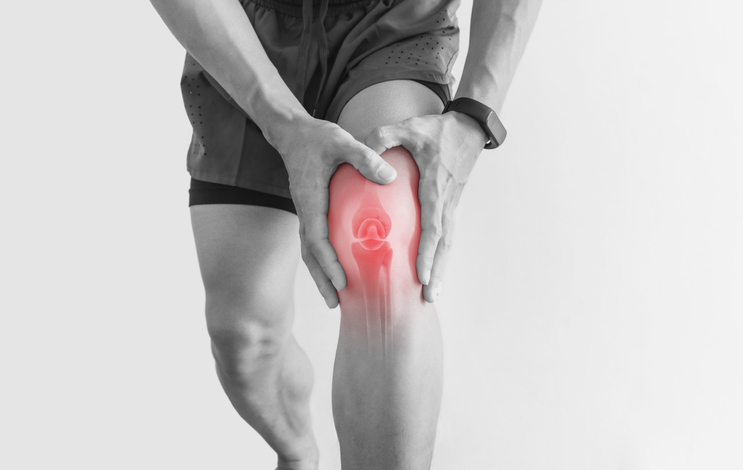
It usually starts the same way.
You’re walking more again. Maybe it’s a loop through Mt. Tabor, a longer stretch down Division, or even getting back on your bike for the first time in a while. Everything feels good at first—normal, even.
Then a few days later, something changes.
The knee feels heavier. A little tight. Maybe slightly off when going downhill or after sitting. Not enough to stop—but enough to notice.
And the thought comes up:
“I thought I was fine… so why is this happening now?”
This Is One of the Most Common Patterns We See in May
At Renew PT, this exact scenario shows up constantly in May—especially with patients in SE Portland.
Because April is when people start moving again.
May is when the body responds to that increase.
Walking routes get longer. Mt. Tabor becomes part of the routine again. Bike rides stretch out past what they were in early spring.
And that’s when underlying gaps begin to show up.
Why It Feels Fine… Until It Doesn’t
The key detail in this pattern is timing.
You felt fine at first.
That usually means:
- Basic movement is working
- Pain is no longer the limiting factor
- Your body can handle short-term activity
But what hasn’t fully returned yet is capacity.
Capacity means your body can handle:
- Repeated movement
- Longer duration
- Changing terrain
- Day-after-day activity
When capacity isn’t fully rebuilt, symptoms don’t show up immediately.
They show up after.
What’s Actually Happening
In SE Portland environments—especially around Mt. Tabor or uneven sidewalks near Hawthorne and Division—movement is rarely perfectly consistent.
You’re:
- Walking on slight inclines
- Adjusting to uneven pavement
- Navigating turns, curbs, and cambers
- Possibly mixing in biking or longer routes
Each of these adds small demands.
Individually, they’re manageable.
But combined over time, they expose weaknesses in:
- Knee control
- Hip stability
- Endurance
- Movement symmetry
That’s why the knee “acts up” days later—not during the first walk.
A Quick Self-Check
If this sounds familiar, ask yourself:
- Does your knee feel fine early, then worse later in the day?
- Do you notice it more after multiple active days in a row?
- Does downhill or uneven ground feel slightly different?
- Does one side feel less stable than the other?
If yes, you’re likely dealing with a capacity gap, not a new injury.
The Mistake Most People Make Here
At this point, most people do one of two things:
- Pull back completely
- Push through and hope it resolves
Neither usually solves the problem.
Pulling back reduces irritation—but doesn’t fix the underlying issue.
Pushing through often reinforces the same movement pattern that caused it.
What’s missing is understanding what’s actually causing it.
Do You Need Physical Therapy for This?
This is where the hesitation comes in.
Because it’s not severe, it’s easy to think:
“Maybe I should just wait this out.”
And for some cases, that works.
But when symptoms:
- repeat with activity
- build over time
- or feel inconsistent
…it usually means something hasn’t fully progressed.
A physical therapy evaluation helps answer one simple question:
Is this something that needs correction—or just progression?
At Renew PT, many patients come in at this exact stage—not right after surgery, but when things feel “almost right.”
What Patients Are Often Surprised to Learn
This is where cost concerns usually come up.
Most people assume:
“If I go in, this is going to turn into weeks of appointments.”
But that’s often not the case.
Many patients are surprised that:
- The issue can be identified in a single visit
- They don’t need long-term treatment
- A simple progression plan solves the problem
Sometimes it’s not about doing more.
It’s about doing the right next thing.
Why This Happens More in SE Portland
SE Portland creates a perfect storm for this pattern.
Between:
- Mt. Tabor elevation
- Older uneven sidewalks
- Increased biking in spring
- Walkable neighborhoods
…it’s easy to gradually increase activity without realizing how much load is changing.
You don’t feel it immediately.
You feel it after a few days of consistency.
When to Wait vs When to Get It Checked
You can usually wait if:
- symptoms improve each day
- discomfort is decreasing overall
- activity feels more consistent over time
It’s worth getting checked if:
- symptoms repeat every time you increase activity
- discomfort builds over multiple days
- one side consistently feels off
- you’re unsure whether to push forward or scale back
You don’t need to wait for it to get worse.
Getting Clarity (Without Overcommitting)
If you’re unsure what’s going on, the goal doesn’t have to be long-term therapy.
It can simply be clarity.
You can request an evaluation through the
Renew PT contact page.
And if you want to see how others in SE Portland handled similar situations, you can read through the
Renew PT testimonials page.
A Better Way to Think About It
Instead of asking:
“Why is this happening again?”
A better question might be:
“What hasn’t fully caught up yet?”
For many people in SE Portland this time of year, that answer becomes clear quickly—with the right evaluation.
And often, it doesn’t take nearly as much time or cost as they expected to fix it.
